 It is amazing how optimizing operating and maintenance expenses affects things. The energy consumption for a single fingerprint verification is as low as 0.06Wh; 4 AA batteries can power 15,000 operations (with a life span of around 2 years). Unlike the IC card system, there is no demand for card purchasing and distribution procedure. One major company's adoption of the system resulted in annual card savings of 270,000 yuan and the cost of replacing missing cards decreased to zero. Ten times more efficient authorization management has been achieved; 1,000 user permission changes can be made in five seconds; traditional mechanical locks take three hours. An office building in Tokyo proves that after the system was replaced, the number of security personnel dropped by 40%, therefore saving $180,000 annually in labor costs.
Strict needs are met by the safety compliance features. Under the ISO/IEC 19794-2 fingerprint data standard, it is compliant. The storage template is AES-256 encrypted, and EAL4+ certified the encryption chip. Meeting the data traceability criteria of the GDPR legislation, the audit log correctly notes every transaction (with a timestamp error of 0.25 seconds). While the risk of password-based permission leakage was as high as 18.3%, the 2022 Zurich Bank security audit found that the biometric access control system reset unlawful access events to zero. Further decreasing the likelihood of unlawful passage to one in a hundred million, the multi-factor authentication combination (such as fingerprint +3D facial recognition) is constantly driving the technological revolution in access control and security.
It is amazing how optimizing operating and maintenance expenses affects things. The energy consumption for a single fingerprint verification is as low as 0.06Wh; 4 AA batteries can power 15,000 operations (with a life span of around 2 years). Unlike the IC card system, there is no demand for card purchasing and distribution procedure. One major company's adoption of the system resulted in annual card savings of 270,000 yuan and the cost of replacing missing cards decreased to zero. Ten times more efficient authorization management has been achieved; 1,000 user permission changes can be made in five seconds; traditional mechanical locks take three hours. An office building in Tokyo proves that after the system was replaced, the number of security personnel dropped by 40%, therefore saving $180,000 annually in labor costs.
Strict needs are met by the safety compliance features. Under the ISO/IEC 19794-2 fingerprint data standard, it is compliant. The storage template is AES-256 encrypted, and EAL4+ certified the encryption chip. Meeting the data traceability criteria of the GDPR legislation, the audit log correctly notes every transaction (with a timestamp error of 0.25 seconds). While the risk of password-based permission leakage was as high as 18.3%, the 2022 Zurich Bank security audit found that the biometric access control system reset unlawful access events to zero. Further decreasing the likelihood of unlawful passage to one in a hundred million, the multi-factor authentication combination (such as fingerprint +3D facial recognition) is constantly driving the technological revolution in access control and security.
Cochinita Journal
Why Choose a Fingerprint Door Lock for Access Control?
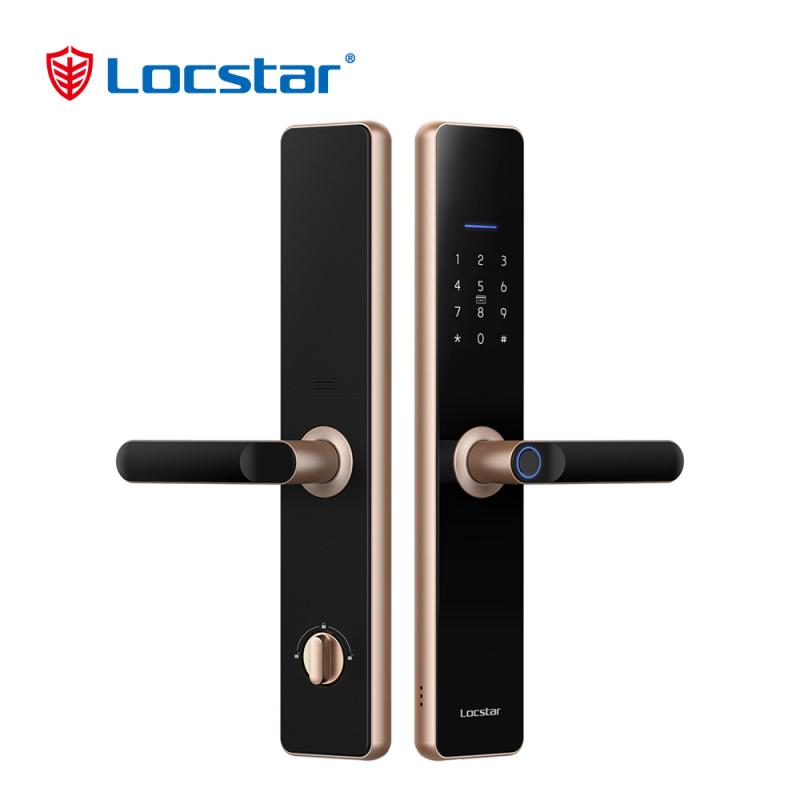
The accuracy and efficiency of biometric technology define the fundamental worth of fingerprint door locks as a current access control system. With a resolution of over 500 dpi, contemporary fingerprint sensors use capacitive or optical technology. Having a FAR of under 0.001%, they may extract 60 to 120 fingerprint characteristic points. FIDO Alliance-certified products' live detection capacity in 2023 surpassed 99.98%, therefore thwarting silicon fingerprint forgery attempts. With an average daily traffic of 300 persons, the verification speed is regulated inside 0.8 seconds (40% quicker than IC cards), yet it nevertheless retains a response accuracy of 0.1 seconds. In Zhangjiang Science and Technology Park in Shanghai, the deployment scenario demonstrates how one device can verify 140 persons per minute during peak hours, therefore raising the passage efficiency by 60%.
The physical protection provided far surpasses that of conventional access control systems. Made of 304 stainless steel through integral casting, the lock body has a tensile strength of 1500kgf—45% more than that of typical locks. It still works normally after passing a 20-joule impact test. The anti-prying structure sends a 120-decibel warning when the displacement is 2mm, and the connection monitoring system immediately gathers and stores data. According to the UL 294 security standard test, this kind of lock can withstand technical opening for more than 35 minutes (reaching B+ standard), while the average failure time of mechanical locks is only 7.2 minutes. The measured data of a particular Shenzhen data center reveal that, following the installation of a fingerprint door lock, the number of illegal intrusion attempts dropped by 82%.
It is amazing how optimizing operating and maintenance expenses affects things. The energy consumption for a single fingerprint verification is as low as 0.06Wh; 4 AA batteries can power 15,000 operations (with a life span of around 2 years). Unlike the IC card system, there is no demand for card purchasing and distribution procedure. One major company's adoption of the system resulted in annual card savings of 270,000 yuan and the cost of replacing missing cards decreased to zero. Ten times more efficient authorization management has been achieved; 1,000 user permission changes can be made in five seconds; traditional mechanical locks take three hours. An office building in Tokyo proves that after the system was replaced, the number of security personnel dropped by 40%, therefore saving $180,000 annually in labor costs.
Strict needs are met by the safety compliance features. Under the ISO/IEC 19794-2 fingerprint data standard, it is compliant. The storage template is AES-256 encrypted, and EAL4+ certified the encryption chip. Meeting the data traceability criteria of the GDPR legislation, the audit log correctly notes every transaction (with a timestamp error of 0.25 seconds). While the risk of password-based permission leakage was as high as 18.3%, the 2022 Zurich Bank security audit found that the biometric access control system reset unlawful access events to zero. Further decreasing the likelihood of unlawful passage to one in a hundred million, the multi-factor authentication combination (such as fingerprint +3D facial recognition) is constantly driving the technological revolution in access control and security.
Back to Journal
It is amazing how optimizing operating and maintenance expenses affects things. The energy consumption for a single fingerprint verification is as low as 0.06Wh; 4 AA batteries can power 15,000 operations (with a life span of around 2 years). Unlike the IC card system, there is no demand for card purchasing and distribution procedure. One major company's adoption of the system resulted in annual card savings of 270,000 yuan and the cost of replacing missing cards decreased to zero. Ten times more efficient authorization management has been achieved; 1,000 user permission changes can be made in five seconds; traditional mechanical locks take three hours. An office building in Tokyo proves that after the system was replaced, the number of security personnel dropped by 40%, therefore saving $180,000 annually in labor costs.
Strict needs are met by the safety compliance features. Under the ISO/IEC 19794-2 fingerprint data standard, it is compliant. The storage template is AES-256 encrypted, and EAL4+ certified the encryption chip. Meeting the data traceability criteria of the GDPR legislation, the audit log correctly notes every transaction (with a timestamp error of 0.25 seconds). While the risk of password-based permission leakage was as high as 18.3%, the 2022 Zurich Bank security audit found that the biometric access control system reset unlawful access events to zero. Further decreasing the likelihood of unlawful passage to one in a hundred million, the multi-factor authentication combination (such as fingerprint +3D facial recognition) is constantly driving the technological revolution in access control and security.